Chihuahua that barks a lot: causes and solutions
A barking Chihuahua is not a bug: it's a dog. But when it becomes frequent, very loud, or triggered by anything and everything, it can quickly feel overwhelming. The good news is that barking never happens "by chance." It has a function: to warn, to ask, to express an emotion, to push away, to get attention.
In this article, we're going to do something very useful: link barking to its most common causes in Chihuahuas, then outline concrete solutions, applicable in everyday life, without shouting, without punishment, and without making excuses. Goal: to have a calmer dog and a quieter home.
Why Chihuahuas bark so much: a small but very vigilant dog
Chihuahuas are often described as "alert" dogs. Translation: they quickly notice changes in their environment and react strongly. Their size also plays a role: when you're small, you sometimes compensate by making yourself heard. Add to that a very strong bond with their human, and you get a dog that can bark to protect, to anticipate, to demand, or simply out of heightened emotion.
Before looking for a solution, you must therefore answer one question: why does your Chihuahua bark in this specific situation? The same behavior (barking) can hide completely different motivations.
The golden rule: treat the cause, not the noise
The human reflex is often to want to "make them stop barking." Except that barking is a symptom. If you cut off the symptom without changing the emotion or need behind it, the dog will find another strategy: bark louder, growl, nip, fidget, destroy, or panic.
So we're going to proceed like a detective: identify the triggers, understand the emotion, then implement a simple and coherent plan.
Step 1: identify the type of barking (the mini-diagnosis)
Take a note (in your phone, that's perfect) on 3 points:
1) Trigger: what happens just before? doorbell, noise, other dog, departure, food bowl...
2) Distance: how far from the "thing" does it bark? window, door, sidewalk, hallway...
3) Goal: what does it do next? it calms down if you arrive, it runs to the window, it demands, it flees...
With this, you will quickly recognize the main category.
Cause 1: alert barking (doorbell, noises, passersby)
This is the classic: someone walks down the hall, a neighbor closes a door, the doorbell rings, and your Chihuahua turns into a siren. Here, the idea is not to eliminate the alert (it's a natural behavior), but to reduce the intensity and, above all, to shorten the duration.
Concrete solutions
1) Reduce access to the trigger: if your dog barks at the window, start by limiting observation. Partially close a shutter, use an opaque film, or block access to an area. This is not "giving in," it's removing fuel from the fire.
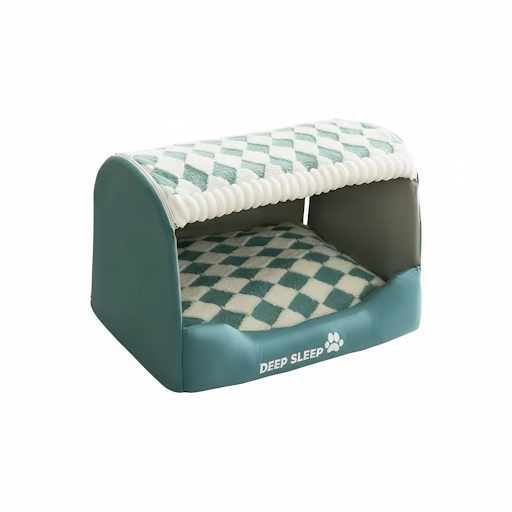
2) Teach an alternative behavior: instead of running to the door, teach "to your bed." You reward your Chihuahua when it goes to its bed. Initially, you do this out of context (without the doorbell), then you gradually add small noises.
3) Desensitize to the doorbell: ring it very softly (or use a recorded sound), then treat. The sound becomes a reward signal, not an alert signal. Little by little, you increase the volume and realism.
4) Your reaction matters: if you shout, you're joining the chorus. Speak softly, move slowly, and guide your dog towards the expected action (its bed).
Cause 2: protective barking (over you, over the house)
Some Chihuahuas "guard" their human: they bark when someone approaches, when you talk to a stranger, or when a guest enters. Here, the dog thinks it has to manage the situation. The more you let it do this, the more it trains itself to be the head of security.
Concrete solutions
1) Regain control of distance: when a guest arrives, don't let your Chihuahua be on the front lines. Put it behind a barrier, in another room for a few minutes, or in a safe space. Distance = calm.
2) Create a welcome ritual: your dog goes to its bed, you reward it, the guest initially ignores the dog. When the Chihuahua settles down, the guest can throw a treat from a distance, without contact. We replace "I bark to manage" with "I settle down and pleasant things happen."
3) Avoid involuntary reinforcement: if every time it barks you pick it up in a panic, it may understand that someone's arrival is actually worrying. The idea is to reassure through calmness, not agitation.
Cause 3: fear or stress barking (outside, noises, dogs)
A Chihuahua can bark because it is scared: a bicycle, a running child, a big dog, a truck. The barking then serves to make what is scary go away. This is often accompanied by a low posture, avoidance, ears back, or visible tension.
Concrete solutions
1) Increase the distance: this is the priority. If your Chihuahua barks at a dog 5 meters away, move 15 meters away. At a comfortable distance, it learns.
2) Associate the trigger with something positive: as soon as a trigger appears (in the distance), treat. You are not rewarding the barking, you are rewarding the appearance of the trigger as long as the dog stays below the explosion threshold.
3) Choose a comfortable harness: a stressed dog will pull more. A suitable harness avoids irritating the neck and gives you more control without pain.
4) Calmer, shorter, more frequent outings: prioritize less busy places at first. The goal is to build confidence, not to "habituate" it by overwhelming it.
Cause 4: excitement barking (outing, play, visitors)
Here, your Chihuahua barks because it's too happy or too worked up: you pick up the leash, you open a bag of treats, someone arrives... and it goes off. This is not dominance: it's still immature emotional regulation.
Concrete solutions
1) Slow down rituals: pick up the leash, put it down. Wait for calm. Pick it up again. The message is simple: calmness moves the action forward.
2) Reward silence, not barking: if your Chihuahua barks and you still go out, it learns that barking speeds up departure. Wait for a micro-second of silence, then you move.
3) Teach "sit and look at me": this is a very effective exercise to redirect energy. You do it at home first, then use it before exciting moments.
Cause 5: barking to ask (attention, food, door)
Some dogs learn very quickly: I bark, and I get what I want. A door opens, a toy appears, a human talks, a treat falls. In this case, your Chihuahua uses barking like a button.
Concrete solutions
1) Don't reward barking: as long as it barks, nothing happens. As soon as there is silence, you grant access (door, play, attention). Initially, you reward very short periods of silence.
2) Give another way to ask: a bell on the door, sitting on a mat, bringing a toy. The goal is to replace one behavior with another, not to forbid without an alternative.
3) Prevent demands: if your Chihuahua barks at a fixed time to eat, set a stable routine, and keep it busy before the meal (an occupation toy, a few minutes of calm play).
Cause 6: barking due to boredom (or lack of activity)
A Chihuahua doesn't need 20 km a day, but it does need stimulation. A bored dog invents activities, and barking can be one of them: at the window, at the slightest noise, or just to release tension.
Concrete solutions
1) Occupation games: 10 minutes of searching for treats in the house often tires them more than a straight walk.
2) Toys adapted to small jaws: durable plush toys, chew toys, mini ropes. Alternate rather than leaving everything accessible.
3) Short training sessions: 3 minutes, several times a day. Learning "to bed," "look," "stay," channels energy and strengthens your bond.
Cause 7: barking when you leave (separation anxiety)
If your Chihuahua barks when you leave the room, when you put on your shoes, or when you go out, we're touching on separation anxiety or strong dependence. We sometimes see associated behaviors: whining, destruction, house-soiling, agitation.
Concrete solutions
1) Work on micro-absences: you go out for 3 seconds, you come back, without effusiveness. Then 10 seconds, then 30. The dog learns that your departures are normal.
2) Downplay departure signals: pick up the keys, then sit down. Put on your jacket, then stay. We break the association "keys = abandonment."
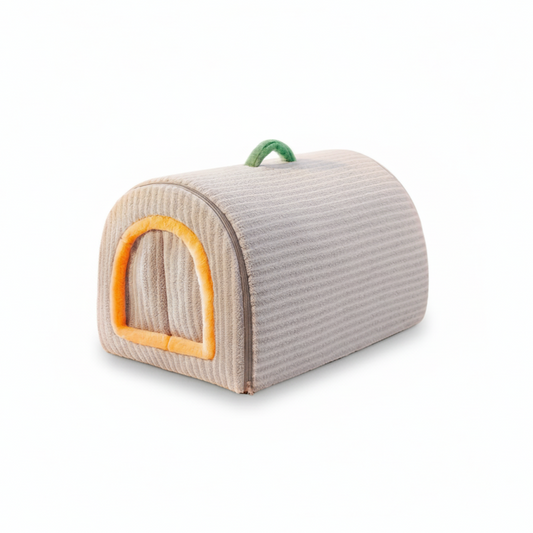
3) Create a comfort zone: a stable bed, an object that smells like you, and possibly an occupation toy reserved for absences.
4) If it's intense: ask for advice from a trainer or your veterinarian. Severe anxiety can be treated, but sometimes support is needed.
Cause 8: pain, discomfort, or medical problem
Sometimes, barking is a signal of discomfort: pain, itching, dental problem, digestive discomfort. If barking appears suddenly, without an obvious trigger, or is accompanied by a change in mood, sleep, appetite, a medical cause should be considered.
Signs to watch for: whining, unusual aggressiveness, refusal to be touched, lameness, fatigue, vomiting, diarrhea, or sudden nocturnal barking. In case of doubt, veterinary advice is the best option.
The 5 mistakes that prevent progress
Mistake 1: shouting. You add noise to noise.
Mistake 2: punishing after the fact. The dog doesn't make the connection, it just learns that you are unpredictable.
Mistake 3: being inconsistent. One day you ignore, one day you pet, one day you open the door.
Mistake 4: asking too quickly. If the dog explodes at 5 meters, you don't train at 5 meters.
Mistake 5: forgetting fatigue and boredom. A mentally rested dog progresses much faster.
Simple 7-day action plan (no table, just clear)
Day 1: note the 3 main triggers and their intensity.
Day 2: reduce access to trigger number 1 (window, door, hallway).
Day 3: teach "to your bed" out of context, 3 short sessions.
Day 4: associate a light noise (faint doorbell or door) with a treat.
Day 5: work outside at a comfortable distance from a trigger (dog, bicycle), treats.
Day 6: add a calm ritual before going out (leash = calm = departure).
Day 7: review: what has most improved the duration and intensity? keep only 2 actions.
Frequently Asked Questions
Does my Chihuahua bark because it's dominant?
In the vast majority of cases, no. The most frequent causes are alertness, fear, excitement, protection, or involuntary learning (I bark = I get). Thinking "dominance" often leads to overlooking the real solutions.
Should I completely ignore my Chihuahua when it barks?
Ignoring can only work if the barking is to ask for something and there is no real fear or alert. If your Chihuahua barks because it is scared or protecting, ignoring can make it worse. In these cases, we work more on distance, desensitization, and alternative behavior.
How long until I see results?
Often, you see an improvement in the duration of barking in a few days, provided you are consistent. For barking related to fear or anxiety, it takes more time, but progress is very clear if you respect distance and gradual progression.
Our recommendations
Depending on the cause, some of our products can help in everyday life:
• Bedding: a comforting bed to teach "to your bed"
• Harness: more comfort and control outdoors
• Transport: carrier bag for busy environments
• Toys: occupation and chewing to channel energy
Insert your internal links to your corresponding collections.
Conclusion
A Chihuahua that barks a lot is not "mean" or "capricious." It is expressing an alert, an emotion, or something it has learned. By identifying the triggers and applying a few simple and consistent actions daily, the intensity and duration of barking can be significantly reduced.
Remember the essentials: distance, calm, rewarding desired behavior, and progression. It's less dramatic than shouting, but infinitely more effective.
After barking, the question of transport often comes up
Our guide "Chihuahua in the car: harness, seatbelt, carrier… the safety guide" will help you transport your small dog in the best conditions!