Chihuahua in the car: harness, seatbelt, carrier… the safety guide
Transporting a Chihuahua by car seems simple… until the day it jumps onto your lap, starts trembling, barks at everything that moves, or worse: risks getting under the pedal at the wrong moment. In a car, safety is not a minor detail. For you, for the passengers, and especially for your little dog.
In this guide, we will look at the safest solutions for transporting a Chihuahua: harness + seatbelt, carrier bag, crate, booster seat. We will also discuss common mistakes (those that give a false sense of security), motion sickness, and good habits to establish.
Why car safety is essential, even for a short trip
A Chihuahua weighs little. Precisely: in case of emergency braking, it becomes a projectile. Even at low speed, the impact can be serious. And normally, an unrestrained dog can distract you, move at the wrong time, or slip to the floor. This is not paranoia: it is basic risk management.
The objective is twofold:
• prevent your Chihuahua from roaming freely in the cabin
• limit the forces on its body in case of impact (and therefore choose a system adapted to its morphology)
The 4 transport options (from simplest to most secure)
There are several solutions. The best one depends on your car, the size of your Chihuahua, its tolerance to transport, and your journeys. Here are the 4 main options, with their advantages and limitations.
Option 1: Harness + seatbelt (the most common solution)
The principle: your Chihuahua wears a harness, connected to a strap that clips into the seatbelt buckle or onto the ISOFIX anchor (depending on the model). This is a very common solution because it is practical: it’s quick to install, quick to remove, and the dog can sit or lie down.
What makes a good harness + seatbelt solution
To be truly useful, the system must meet these points:
• a harness that distributes traction across the chest, not the neck
• a short strap: it must limit movement (not allow the dog to go to the front)
• a strong and well-positioned attachment point
• an adjustment that prevents the dog from getting tangled
A poorly fitted harness or a strap that is too long creates the illusion of being restrained, without reducing risks.
Common mistakes to avoid
Mistake 1: attaching the seatbelt to a collar. In braking, all force goes to the trachea and cervical spine.
Mistake 2: using a harness that is too thin or too flexible, which twists and compresses.
Mistake 3: strap too long: the dog reaches the driver or falls off the seat.
Mistake 4: low-quality "universal" clip: it can break or unclip.
Mistake 5: placing the dog on the front passenger's lap. Even if restrained, this is a high-risk area.
Where to place your Chihuahua with this system
The safest place is in the back. The front is more exposed (airbag, dashboard, distraction). In the back, ideally on a seat with a stable attachment point, and with a strap short enough for it to stay in its zone.
Option 2: Attached carrier bag (very practical for Chihuahuas)
A carrier bag is often an excellent choice for a Chihuahua, provided it is suitable for the car. A well-designed bag offers three benefits:
• your dog is contained (less movement, less stress)
• it is more "visually protected" and often feels secure
• it is easy to transport once you arrive (vet, train, walk)
Warning: a bag carried on the shoulder or placed freely on the seat is not a safe solution. It must be secured.
How to choose a bag truly suitable for the car
Aim for a bag that meets these criteria:
• attachments or seatbelt loops (to secure it to a seat)
• stable base (the bag doesn't collapse)
• good ventilation (especially in summer)
• secure opening (strong zip, leak-proof)
• internal carabiner to connect to the harness (not the collar)
• appropriate size: your Chihuahua should be able to turn around and lie down, without being jostled around
A bag that is too small causes stress and can hinder breathing. A bag that is too large allows the dog to be tossed around and increases discomfort.
Comfort tip that changes everything
Add a small blanket or a thin cushion that smells like home. Familiar scents often reduce stress. And it also protects the bag from small claws.
Option 3: Transport crate (often the most secure)
A transport crate (or cage) is, in many cases, the safest solution, especially if you make regular or long journeys. It strongly limits the dog's movements and protects it better in case of impact.
For a Chihuahua, a well-sized rigid crate can be very reassuring: it's a stable "den." The mistake is choosing a crate that is too large: the more space there is, the more the dog is shaken in case of braking.
Where to place the crate
Two common placements:
• on the back seat, strapped in with the seatbelt
• in the trunk of a station wagon/SUV, if the space is secure and the crate is properly fastened
The key point: the crate must be immobilized. A loose crate in a trunk can move violently.
Option 4: Booster seat (the comfort + control compromise)
A booster seat (or "booster") is a car seat for dogs, often with raised sides, which is secured with the seatbelt and has an internal attachment. It is popular because it allows the dog to see outside, which sometimes reduces stress.
For a Chihuahua, this can be very pleasant, provided that:
• the booster seat is securely fastened
• the internal attachment is short
• the dog is attached to a harness
If your Chihuahua is very anxious, seeing a lot of stimuli can, on the contrary, increase excitement. In this case, a bag or crate often works better.
Which option to choose for your Chihuahua?
Here's a simple logic to decide:
• short trips and comfortable dog: harness + seatbelt or securely fastened booster seat
• stressed dog, trembles, hides: attached bag or crate (cocoon effect)
• regular long trips: securely fastened crate (often the most stable)
• prone to motion sickness: stable crate/bag + gradual training (see below)
If you hesitate between two options, choose the one that most reduces the dog's movements: less movement = less stress and less risk.
Harness, collar, leash: what to remember
In the car, always attach to a harness, never to a collar. A collar can cause neck injuries during braking. A well-fitted harness better distributes forces across the chest.
Choose a comfortable harness that doesn't rub under the armpits and doesn't restrict the shoulders. On a Chihuahua, a bad harness can quickly cause irritation.
Adjustment: the 3 points that prevent 80% of problems
1) Strap length: your Chihuahua should be able to sit and lie down, not move to the front.
2) Position: attach to the back seat, with a simple strap path (avoid twisting).
3) Harness adjustment: two fingers under the strap, no more, no less. Too tight = discomfort. Too loose = possible escape.
Motion sickness in Chihuahuas: why it happens
Motion sickness is common in small dogs. The causes can be:
• sensitive inner ear (balance)
• stress related to the car (bad experience, lack of habituation)
• excessive movements (dog being tossed around)
• meal too close to departure
Typical signs: salivation, licking, yawning, trembling, whining, vomiting.
What you can do without medication
1) Stabilize transport: securely fastened bag/crate/booster seat. The less it moves, the better.
2) Ventilation: avoid stuffy air. A hot car increases nausea.
3) Meals: avoid a large meal just before. Many dogs are better on a light stomach.
4) Driving: gentle acceleration, progressive braking, less sharp turns.
5) Gradual habituation: pleasant micro-trips (1 minute, then 3, then 5) with a return home and reward.
When to seek veterinary advice
If your Chihuahua vomits almost every trip, or if the anxiety is very strong, seek veterinary advice. There are suitable solutions (including temporary treatments) but it is never advisable to give medication without professional advice.
Summer: heat, heatstroke, and dangerous mistakes
A Chihuahua overheats quickly. In the car, heat can become a danger in a few minutes. Essential rules:
• never leave your dog alone in the car, even "for 2 minutes"
• prioritize ventilation and avoid direct sun
• provide water for trips
• avoid travel during the hottest hours if possible
If your dog pants heavily, becomes lethargic, has very red gums, or seems disoriented: it is an emergency. Cool it down gradually (cool water, not icy) and contact a veterinarian.
Safety + stress: how to get a Chihuahua used to the car
Many problems stem from a simple point: the car has not been associated with anything positive. A Chihuahua can associate car = vet, noise, movement, discomfort. This can be changed.
Step-by-step habituation plan
Step 1: Carrier bag/crate visible at home. Your dog can enter it, sleep in it, find treats in it.
Step 2: You go to the car, engine off, you stay for 30 seconds, then you go back inside.
Step 3: Engine on, without driving, for a few seconds.
Step 4: 1-minute trip, return home, reward.
Step 5: You gradually increase.
The secret: stay below the stress threshold. If your Chihuahua panics, you've gone too fast.
Should you let your Chihuahua look out the window?
It depends on the dog. For some, seeing outside reduces stress. For others, it increases excitement and barking. If your Chihuahua becomes nervous seeing everything, opt for a more "enclosed" bag or crate, which limits stimuli.
What about the airbag?
A small dog in the front is particularly exposed to the airbag. Even if you restrain your Chihuahua, the airbag can seriously injure it. Rear placement is preferable.
Frequently asked questions
My Chihuahua wants to come on my lap, what should I do?
You avoid it. It's dangerous and reinforces the behavior. Choose stable transport (bag, crate, booster seat) and reward it for staying inside. Initially, use short trips to make it easier.
Can I attach the seatbelt directly to the harness?
No, you need a suitable strap. The car's seatbelt is not designed for a dog and the adjustment will be poor. Use an adapter designed for this, and check the strength of the clip.
Should I use an additional leash?
No, that increases the risk of entanglement. In the car, a simple, short, and secure attachment is preferred. The leash is for use once out, not during the journey.
Our recommendations
Depending on your situation, here are the useful categories to link in the article:
• Comfortable harnesses for small dogs
• Car safety straps/attachments
• Suitable carrier bags
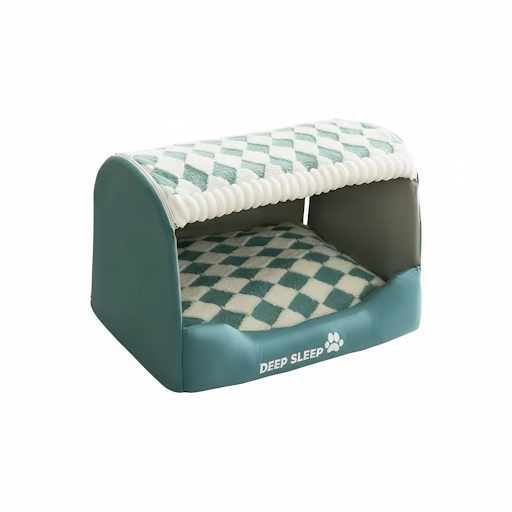
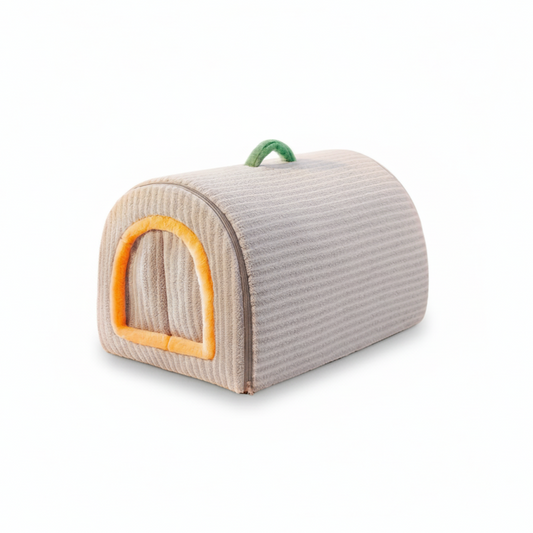
• Pet bed or travel blanket (comfort)
Add your internal links to your corresponding collections.
Conclusion
Safely transporting a Chihuahua by car relies on three pillars: containing, securing, and making the experience comfortable. The best system is one that limits movement, protects your dog in case of braking, and reduces its daily stress.
If you only remember one rule: never use a collar for restraint, always a harness, and ideally in the back.
And if your Chihuahua chews on everything at home, we've prepared a complete guide with what it can chew (and what to avoid).